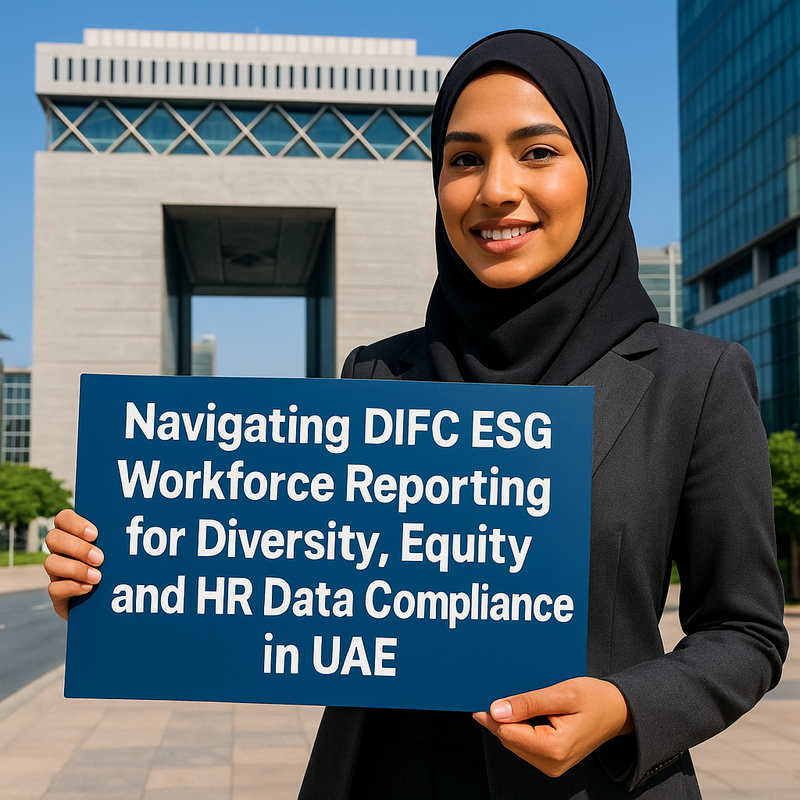
Introduction: The New Frontier of ESG and Workforce Reporting in the DIFC
The Dubai International Financial Centre (DIFC) stands as the Middle East’s preeminent financial hub, renowned for its embrace of global best practices in governance, transparency, and regulatory compliance. As the UAE continues to adapt to tightening international standards and growing investor demands, the adoption of rigorous Environmental, Social, and Governance (ESG) reporting and enhanced workforce disclosures in the DIFC reflect a decisive evolution. This shift is not merely about policy but about embedding responsible business practices—most notably around human resources (HR), diversity, and pay equity—into the DNA of organizations operating in the region.
Recent legal developments, including UAE Labour Law (Federal Decree-Law No. 33 of 2021), Cabinet Resolution No. 18 of 2022, and the DIFC Employment Law (DIFC Law No. 2 of 2019, as amended), have introduced new mandates for ESG and workforce data reporting. These requirements demand robust HR data governance, greater workforce diversity disclosures, and clear demonstration of pay equity. Compliance has shifted from being a reputational tick box to a substantive legal obligation, with significant exposure for non-compliance.
This article explores the legal architectures shaping ESG and workforce reporting within the DIFC, examines practical impacts and risks, and offers actionable legal and HR compliance strategies for UAE-based entities. Whether you are an HR executive, business leader, or legal advisor, understanding these frameworks is now pivotal to maintaining competitive advantage and regulatory credibility.
Table of Contents
- Overview of UAE ESG and Workforce Reporting Laws
- DIFC ESG Framework: Legal Mandates and Expectations
- HR Data Reporting: Structures and Obligations
- Diversity and Inclusion Reporting: Legal and Practical Dimensions
- Pay Equity: Regulatory Requirements and Benchmarking
- Risks of Non-Compliance and Enforcement Mechanisms
- Practical Strategies for Legal and HR Compliance
- Case Studies: Illustrative Scenarios and Lessons Learned
- Conclusion: A Roadmap for Responsible Workforce Disclosure
Overview of UAE ESG and Workforce Reporting Laws
Legal Evolution: From Voluntary Reporting to Mandatory Disclosure
Historically, ESG and workforce diversity reporting in the UAE was driven by market pressures, international investors, and voluntary adoption by leading firms. However, the landscape has changed notably since the promulgation of Federal Decree-Law No. 33 of 2021 (the New UAE Labour Law) and DIFC Employment Law (DIFC Law No. 2 of 2019, as amended), coupled with evolving Circulars and Policy Statements from the UAE Ministry of Human Resources and Emiratisation (MoHRE) and the DIFC Authority.
Key statutory underpinnings include:
- Federal Decree-Law No. 33 of 2021: Modernises employment relationships, codifies equal pay for equal work, and addresses workplace equality, diversity, and anti-discrimination.
- DIFC Employment Law No. 2 of 2019 (as amended in 2021): Imposes explicit employer duties around non-discrimination, equal opportunity, record-keeping, and reporting.
- DIFC Operating Law (DIFC Law No. 7 of 2018): Supports corporate governance and ESG disclosures for entities regulated in the DIFC.
- Cabinet Resolution No. 18 of 2022: Underpins the UAE’s vision for gender balance, pay equity, and enhanced private sector reporting.
Global Drivers And Local Reforms
The growing international focus on ESG—solidified through standards such as the International Sustainability Standards Board (ISSB) and Global Reporting Initiative (GRI)—has catalysed reforms in the UAE. In response, the Central Bank of the UAE and other regulators now actively encourage or require financial institutions, listed companies, and major DIFC entities to publish credible ESG and workforce data, including HR, diversity, and pay equity metrics.
DIFC ESG Framework: Legal Mandates and Expectations
Current Regulatory Mandate
The DIFC has positioned itself at the regional vanguard of ESG, requiring regulated entities to incorporate ESG principles across governance, workforce practices, and public disclosures. Key regulatory tools include:
- DIFC Operating Law No. 7 of 2018: Mandates transparent reporting and record-keeping of material non-financial matters, including social and HR data.
- DIFC Employment Law (Art. 59-62): Stipulates employer obligations related to diversity, equal treatment, record-keeping and reporting.
- DIFC Authority Guidance Notes: Outline expectations for entities to report gender pay gaps, workforce profile statistics, and diversity targets on an annual basis.
Comparison Table: Key Features of Old vs. New DIFC Reporting Duties
| Dimension | Pre-2019 Requirements | Post-2019 (Current/2025) Requirements |
|---|---|---|
| Reporting Scope | Voluntary or sector specific | Mandatory annual reporting for DIFC regulated entitites |
| HR Data Disclosure | Basic workforce statistics | Detailed HR data (gender, age, role, pay bands, nationality) |
| Diversity Reporting | Not required | Report on gender, nationality, and disability inclusion |
| Pay Equity Analysis | Not required | Mandatory gender pay audit and reporting |
| Sanctions | Minimal | Fines, public censure, potential business restriction |
Why This Matters for UAE Businesses and DIFC Entities
For entities operating in or through the DIFC, the compliance bar is now higher—and failure to meet these standards can not only threaten regulatory licenses but more broadly affect access to capital, insurance, government tendering and reputational value.
HR Data Reporting: Structures and Obligations
HR Data Collection and Reporting Under DIFC Law
Article 60, DIFC Employment Law requires employers to:
- Maintain up-to-date records for all employees (including basic employment terms, working hours, wages, and leave).
- Compile HR data detailing workforce structure, including gender, nationality, job category, and seniority.
- Disclose selected HR and pay data to the DIFC Authority or upon audit request.
Confidentiality and Data Protection Implications
DIFC Data Protection Law (DIFC Law No. 5 of 2020) overlays a data governance duty: employers must safeguard employee data, ensure data minimisation, and respect subject access rights.
What Data Must Be Captured?
Typically, the following HR data points are required for DIFC entities:
- Gender, age, and nationality of all workers
- Distribution by employment category (junior staff, middle management, executive)
- Annual wage bands and remuneration structures
- Termination, retention and new hire statistics
- Diversity attributes (e.g., disability, if disclosed voluntarily by the employee)
Practical Insights: Building a Robust HR Data Strategy
Legal compliance is only step one. For best-in-class outcomes, organisations should:
- Create or upgrade HR information systems (HRIS) to automate ongoing data capture and periodic reporting.
- Implement clear data retention and deletion schedules, in line with the DIFC Data Protection Law.
- Appoint a responsible officer (e.g., Data Protection Officer) to coordinate HR and compliance functions for workforce data governance.
- Develop comprehensive employee communications around data privacy and reporting purposes.
Diversity and Inclusion Reporting: Legal and Practical Dimensions
DIFC Law and UAE Policy on Workforce Diversity
Article 59, DIFC Employment Law prohibits discrimination on the basis of gender, age, race, religion, and disability, while Federal Decree-Law No. 33 of 2021 affirms equal employment opportunities and mandates the elimination of gender pay gaps.
Cabinet Resolution No. 18 of 2022 advances the vision for gender balance and inclusive workplaces by:
- Setting annual gender diversity targets for private sector entities with 50+ employees.
- Requiring boards of listed companies and regulated entities to report on diversity achievement.
Reportable Diversity Metrics in the DIFC
Organisations in the DIFC are now expected to disclose:
- Proportion of women in total workforce and in senior management
- Breakdown of national versus expatriate talent
- Representation of other protected groups (e.g., people of determination / employees with disabilities)
- Progress toward specified diversity and inclusion objectives
Illustrative Example: Annual Diversity Reporting Flow
Below is a suggested placement for a process flow visual, mapping the data capture and reporting stages:
- Workforce Survey & Data Collection → Data Cleansing & Validation → Internal Analysis → Preparation of Annual Diversity Report → Submission to DIFC Authority & Public Disclosure (if required)
Practical Guidance: Advancing Diversity, Avoiding Tokenism
- Set measurable targets for gender and nationality diversity linked directly to legal obligations.
- Review recruitment, promotion, and compensation practices to eliminate systemic bias.
- Engage leadership in championing inclusive culture—senior buy-in is essential for real progress.
- Document all actions and progress; evidence-based reporting is the shield against regulatory scrutiny.
Pay Equity: Regulatory Requirements and Benchmarking
Legal Basis for Pay Equity in the DIFC
Article 62, DIFC Employment Law and Article 4(3), Federal Decree-Law No. 33 of 2021 demand “equal pay for equal work” regardless of gender or nationality. Under Cabinet Resolution No. 18 of 2022, all private sector employers must review and, where necessary, rectify gender-based pay disparities in like-for-like roles.
Pay Audit Requirements and Best Practices
- Conduct annual pay audits comparing wage levels for comparable roles, broken down by gender and other diversity markers.
- Submit gender pay gap analysis as part of annual ESG or management reports.
- Develop and publish a pay equity statement, setting out the company’s position and any remedial actions.
Table: Pay Equity Reporting Checklist for DIFC Entities
| Item | Mandatory? | Frequency | Reference |
|---|---|---|---|
| Annual gender pay gap analysis | Yes | Annually | DIFC Law, Cabinet Resolution 18/2022 |
| Pay audit across seniority levels | Recommended | Annually | DIFC Guidance |
| Publication of pay equity statement | Yes (for certain entities) | Annually | DIFC Authority Circulars |
| Rectification action plan for disparities | Required if gap found | As needed | Cabinet Resolution 18/2022 |
Mitigating Pay Discrepancies: Professional Recommendations
- Use anonymised, standardised job benchmarking and pay banding for objective comparisons.
- Document legitimate reasons for any variances, e.g., performance or tenure (never gender or nationality).
- Implement periodic internal reviews, overseen by legal and HR, to ensure ongoing compliance.
Risks of Non-Compliance and Enforcement Mechanisms
Sanctions for Failing ESG and Workforce Disclosure
Consequences for non-compliance with ESG and workforce reporting mandates are material. The DIFC Authority and other regulators may impose:
- Significant financial penalties (often scaled to seriousness and intent)
- Public censure and publication of offending entity names
- Suspension or restriction of business licenses for serious or repeat breaches
- Exposure to employment-related litigation or individual claims for pay inequity or discrimination
Table: Penalties Comparison for Major HR Disclosure Violations
| Offence | Old (Pre-2021) | New (Post-2021/2025) |
|---|---|---|
| Failure to maintain HR data | Sporadic warnings | Fines up to AED 50,000 per breach (DIFC Law) |
| Non-disclosure of gender pay gap | No explicit penalty | Fines + public notice (DIFC Authority) |
| Discrimination in pay or hiring | Employee claim for damages | Regulatory fine + damages + reputational risk |
Managing Regulatory Investigations
If subject to audit or regulatory request, entities should:
- Respond promptly and transparently, providing all requested records.
- Engage legal counsel to oversee the process and communications.
- Rectify any deficiencies as soon as practicable, with documented remedial steps.
Practical Strategies for Legal and HR Compliance
Step-By-Step Compliance Roadmap
For DIFC-based firms seeking to embed ESG and workforce reporting best practice, consider the following:
- Legal Gap Analysis: Map current HR data and diversity practices against DIFC and UAE statutory requirements.
- HR Data Infrastructure: Invest in reliable HRIS platforms to automate capture, storage, and reporting of key metrics.
- Policy and Training: Update HR and compliance policies. Provide regular training for management and staff on data obligations, equality, and reporting duties.
- Diversity & Pay Equity Audit: Conduct annual workforce and pay equity reviews; prepare summaries for reporting and board oversight.
- Governance and Oversight: Appoint board or senior management sponsor for ESG compliance. Consider establishing an ESG or Diversity Committee.
- Stakeholder Communication: Proactively communicate progress and findings to employees, investors, and regulatory authorities.
- External Assurance: Engage independent auditors or legal advisors to verify disclosures and reporting quality.
A visual HR reporting compliance checklist would enhance understanding; suggested for placement after this section.
Case Studies: Illustrative Scenarios and Lessons Learned
Case Study 1: Gender Pay Gap Rectification in a DIFC Bank
Scenario: A leading DIFC-based wholesale bank’s annual ESG report highlighted a 14% average gender pay gap among mid-level managers. The DIFC Authority requested a remediation plan as per DIFC Law and Cabinet Resolution No. 18.
Action and Outcome: The bank established an internal task force, completed a comparative pay analysis, and identified legacy discrepancies stemming from hiring practices a decade earlier.
Proactive realignment of salary bands, transparent communication with affected staff, and publication of the remediation measures resulted in a clean compliance audit the following year, and improvement of the firm’s reputation with local and global investors.
Case Study 2: Workforce Diversity Audit in a Technology Firm
Scenario: Following a DIFC Authority sector review, a technology firm discovered under-representation of female and local talent at senior levels, risking non-compliance with statutory diversity targets.
Action and Outcome: The firm introduced targeted recruitment campaigns, leadership development programmes for high-potential female staff, and revised internal promotion criteria. Follow-up reviews showed measurable progress, which was showcased in their ESG reporting and credited in client due diligence.
Case Study 3: HR Data Breach and Regulatory Penalty
Scenario: An investment manager’s HR reporting was found to be based on outdated, incomplete employee records, and a privacy complaint resulted in a data protection audit.
Action and Outcome: The DIFC Authority imposed fines for both poor record-keeping and breach of employee data rights. The company’s swift external audit, remedial measures, and retraining led to improved HR data governance and restoration of regulatory standing.
Conclusion: A Roadmap for Responsible Workforce Disclosure
The convergence of ESG and workforce reporting obligations within the DIFC is a testament to the UAE’s ambition to match international best practices and investor expectations. Robust HR data processes, diversity disclosures, and pay equity are not just compliance mandates—they are indicators of organisational maturity and future readiness.
As regulatory scrutiny intensifies, businesses in the DIFC must treat ESG data reporting, diversity transparency, and gender pay analysis as core governance pillars. The costs of non-compliance—whether financial, reputational, or operational—are simply too great to ignore. By following a systematic, legally-informed approach to workforce disclosures, forward-thinking organisations can transform compliance from a burden into an opportunity for responsible leadership.
Looking forward, the expectation is that ESG and workforce reporting in the UAE, and specifically in free zones like the DIFC, will continue to evolve. Proactive investments in good governance, data infrastructure, and inclusive workplace culture will ultimately drive sustainable success and regulatory resilience for all DIFC-regulated employers.
