Trademark Infringement in the UAE: Brand Protection, Counterfeit Goods, and Enforcement Strategy
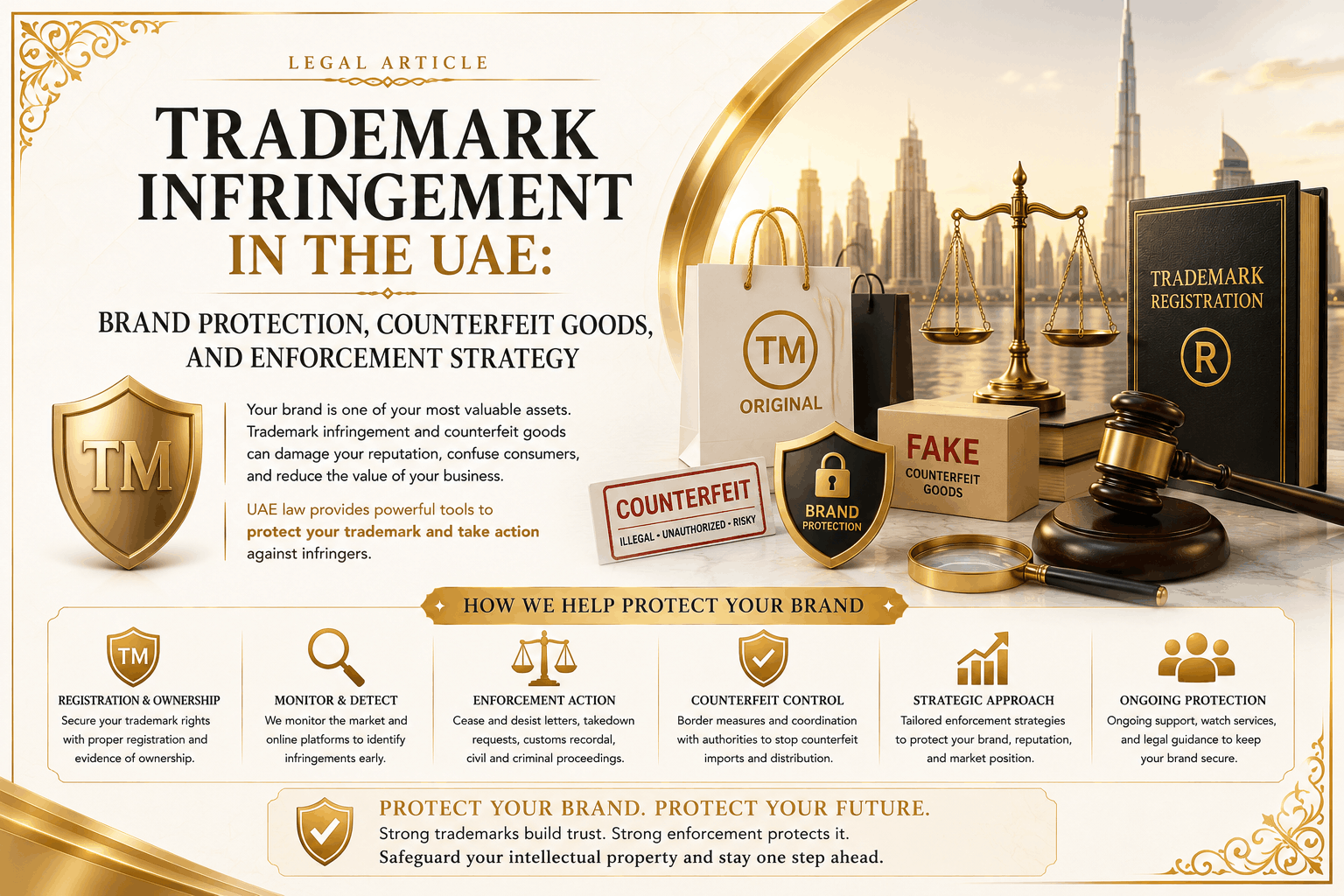
Trademark infringement in the UAE can damage brand value, consumer trust, authorised distribution networks, investor confidence, and market share. Strong protection requires registration, evidence, monitoring, customs strategy, and fast enforcement.
UAE Legal Framework for Trademark Infringement
UAE trademark enforcement is primarily based on Federal Decree-Law No. 36 of 2021 on Trademarks, supported by executive regulations, Ministry of Economy registration services, customs recordal systems, civil court procedures, criminal complaints, administrative enforcement, and online takedown mechanisms.
Official UAE legislation portal | UAE Ministry of Economy | UAE Ministry of Justice | Dubai Customs | Relevant UAE authority website | Dubai Courts | Abu Dhabi Judicial Department | DIFC Courts | ADGM Courts
Key Legal Concepts and Definitions
Important concepts include trademark, registered trademark, infringement, counterfeit goods, passing off, trade dress, cease-and-desist letter, customs recordal, civil claim, criminal complaint, licence, assignment, and market confusion.
Who UAE Trademark Law Applies To
Trademark law may affect UAE and international brand owners, manufacturers, distributors, retailers, importers, exporters, e-commerce sellers, franchise operators, licensees, customs brokers, free zone companies, mainland companies, and consumers exposed to counterfeit goods.
Rights and Obligations of Brand Owners, Retailers, Distributors, and Importers
Brand owners may register, use, license, assign, and enforce trademarks. Retailers, distributors, and importers should verify product authenticity, keep supplier records, avoid counterfeit goods, and respect registered trademark rights.
Trademark Registration in the UAE
Trademark registration through the Ministry of Economy provides a stronger basis for enforcement. A practical filing strategy should consider word marks, logos, Arabic versions, product names, class coverage, future expansion, distributors, e-commerce use, and renewal management.
What Counts as Trademark Infringement?
Infringement may involve identical marks, confusingly similar marks, counterfeit packaging, fake labels, unauthorised signage, misleading dealership claims, online listings, copycat domain names, or continued use after licence or franchise termination.
Counterfeit Goods and Commercial Fraud Risks
Counterfeit goods may involve civil, criminal, customs, consumer protection, and commercial fraud risk. Fast evidence preservation, product comparison, customs strategy, and authority complaints may be necessary.
Passing Off, Trade Dress, and Unregistered Brand Elements
Some infringers avoid exact copying but imitate packaging, colours, layout, product shape, store concept, or online presentation. These cases may require analysis of trademark rights, unfair competition, copyright, design rights, and consumer confusion.
Customs Enforcement and Border Measures
Customs recordal can help stop counterfeit imports and support border enforcement. Brand owners should provide product identification guides, authorised importer lists, renewal updates, and fast response contacts.
Cease-and-Desist Strategy
A cease-and-desist letter may demand that the infringer stop use, remove listings, withdraw goods, disclose suppliers, sign undertakings, and pay compensation. In counterfeit cases, evidence preservation may be needed before sending any warning.
Online Trademark Infringement and E-Commerce Enforcement
Online infringement may involve marketplace listings, fake social media pages, copycat websites, domain names, paid search ads, WhatsApp sales groups, Telegram channels, and dropshipping stores. Screenshots, test purchases, seller identity, and platform records are important.
Civil Claims, Criminal Complaints, and Administrative Action
Trademark disputes may proceed through civil claims for injunctions and damages, criminal complaints for counterfeit goods, administrative complaints before authorities, customs action, online takedowns, or commercial settlement.
Urgent Measures, Seizure, and Evidence Preservation
Urgent measures may be needed where counterfeit goods are in a warehouse, shipment is at customs, online listings are spreading, consumer safety is at risk, or the infringer may hide stock or delete evidence.
Procedures in the UAE
- Audit trademark registration and ownership.
- Collect product, online, seller, and market evidence.
- Compare the registered mark and infringing sign.
- Select the enforcement route: notice, customs, authority, court, platform, or settlement.
- Prepare legal notices, complaints, or takedown requests.
- Request inspection, seizure, removal, or court relief where appropriate.
- Negotiate undertakings, destruction, compensation, and supplier disclosure.
- Monitor the market after enforcement.
Required Documents and Evidence
- Trademark registration and renewal certificates
- Power of attorney and commercial licence
- Licence, franchise, or distributor agreements
- Customs recordal documents
- Genuine and counterfeit product samples
- Side-by-side comparison reports
- Photographs, videos, and online screenshots
- Test purchase invoices and delivery records
- Seller account details and payment records
- Packaging, labels, and consumer complaints
- Import, customs, warehouse, and shipment documents
- Market investigation and expert reports
- Evidence of reputation, use, sales, and loss
Trademark Licensing, Franchising, and Distributor Disputes
Trademark infringement may involve former distributors, terminated franchisees, licensees exceeding scope, or business partners continuing to use the brand after termination. Contract wording and post-termination obligations are critical.
Free Zones, DIFC, ADGM, and Cross-Border Brand Protection
Cross-border disputes may involve mainland, free zone, DIFC, ADGM, offshore, foreign supplier, online seller, customs, logistics, and marketplace issues. Jurisdiction and enforcement strategy should be reviewed early.
Common Misunderstandings
- A trade licence protects the brand.
- A domain name means trademark ownership.
- International registration automatically covers the UAE.
- Only exact copies are infringement.
- Counterfeit goods are only a customs issue.
- A cease-and-desist letter is always the first step.
- Online sellers cannot be identified.
- Settlement means weakness.
Common Mistakes to Avoid
- Delaying trademark registration
- Registering only the logo but not the word mark
- Ignoring Arabic versions and transliterations
- Warning infringers before preserving evidence
- Conducting undocumented test purchases
- Ignoring customs recordal
- Accepting undertakings without monitoring
- Overlooking distributor and franchise contracts
- Failing to calculate damages properly
Practical Examples
Counterfeit Luxury Goods in a Retail Shop
The brand should preserve evidence, conduct a documented test purchase, compare genuine and fake products, confirm trademark registration, and consider authority complaint or civil action.
Online Seller Using a Similar Brand Name
The brand owner should capture screenshots, identify the seller, conduct a test purchase, compare packaging, and consider platform takedown and legal notice.
Former Distributor Continues Using the Mark
The legal issue may involve both trademark infringement and contract breach. Termination notice, licence scope, sell-off rights, and post-termination use should be reviewed.
Counterfeit Shipment at the Border
Customs recordal, product identification guides, quick authenticity confirmation, and complaint strategy become essential.
Legal Risks and Consequences
Trademark infringement may cause loss of brand value, consumer confusion, counterfeit sales, safety risks, reputational damage, lost revenue, distributor conflict, civil claims, criminal complaints, customs seizure, destruction of goods, injunctions, and business disruption.
How a Lawyer Evaluates the Case
A lawyer reviews trademark registration, class coverage, owner identity, use, reputation, similarity, goods or services, confusion, counterfeit evidence, infringer identity, goods location, customs options, online evidence, distributor contracts, urgency, damages, and enforcement prospects.
How a Lawyer Builds a Stronger Legal Position
Legal support may include trademark registration strategy, customs recordal, cease-and-desist letters, complaints, test purchases, evidence organisation, comparison reports, civil claims, criminal complaint advice, online takedowns, settlement undertakings, and monitoring.
Settlement vs Litigation
Settlement may be useful where the infringer agrees to stop quickly, withdraw goods, disclose suppliers, and compensate the brand. Litigation may be necessary where counterfeiting is serious, refusal continues, consumer safety is affected, or formal court orders are needed.
When Urgent Legal Action May Be Needed
- Counterfeit goods are about to be sold
- Goods are at customs or port
- A trade fair is about to open
- Online listings are spreading quickly
- A former distributor refuses to remove signage
- A shipment may be re-exported
- Consumer safety is affected
- Evidence may be deleted
Frequently Asked Questions
1. What is trademark infringement in the UAE?
It occurs when another party uses an identical or confusingly similar mark without authority in a way that harms the trademark owner, misleads consumers, or exploits the brand’s identity.
2. Do I need to register my trademark in the UAE?
Registration is strongly recommended because it gives the owner a stronger legal basis for enforcement before authorities, courts, customs, and platforms.
3. Is a UAE trade licence the same as trademark protection?
No. A trade licence permits business activity. It does not provide the same exclusive brand protection as trademark registration.
4. Can customs help stop counterfeit goods?
Yes. Customs recordal can help identify and stop suspected counterfeit goods, subject to the trademark registration and customs procedures.
5. Should I send a cease-and-desist letter immediately?
Not always. In counterfeit cases, evidence preservation or authority action may be needed before warning the infringer.
6. Can I take action against online sellers?
Yes. Screenshots, test purchases, platform data, seller identity, payment records, and delivery evidence may support online enforcement.
7. What evidence is important?
Registration certificates, samples, photographs, screenshots, invoices, test purchases, packaging, customs documents, seller data, and market investigation reports are usually important.
8. Can a former distributor infringe a trademark?
Yes, if the distributor continues using the trademark after termination or outside the licence scope.
9. Can I claim damages?
Potentially, but damages require evidence of infringement, loss, market harm, sales impact, or other legally relevant damage.
10. Are counterfeit goods only a civil issue?
No. Counterfeit goods may involve civil claims, criminal complaints, customs enforcement, administrative action, and consumer protection risks.
Conclusion
Trademark infringement in the UAE requires prompt, strategic, and evidence-based action. Registration, customs recordal, market monitoring, online enforcement, and clear distributor contracts all help protect brand value.
Early legal advice can help brand owners identify the correct infringer, preserve evidence, choose the right enforcement route, avoid procedural mistakes, negotiate effective undertakings, and protect brand value before the problem becomes more difficult to control.
Need Advice About UAE Trademark Infringement?
Obtain tailored advice on trademark registration, counterfeit goods, customs enforcement, cease-and-desist strategy, civil claims, criminal complaints, online takedowns, distributor disputes, urgent measures, and brand protection.
Book a Legal Consultation