Influencer Marketing in the UAE: Advertising Disclosure, Brand Liability, and Defamation Risks
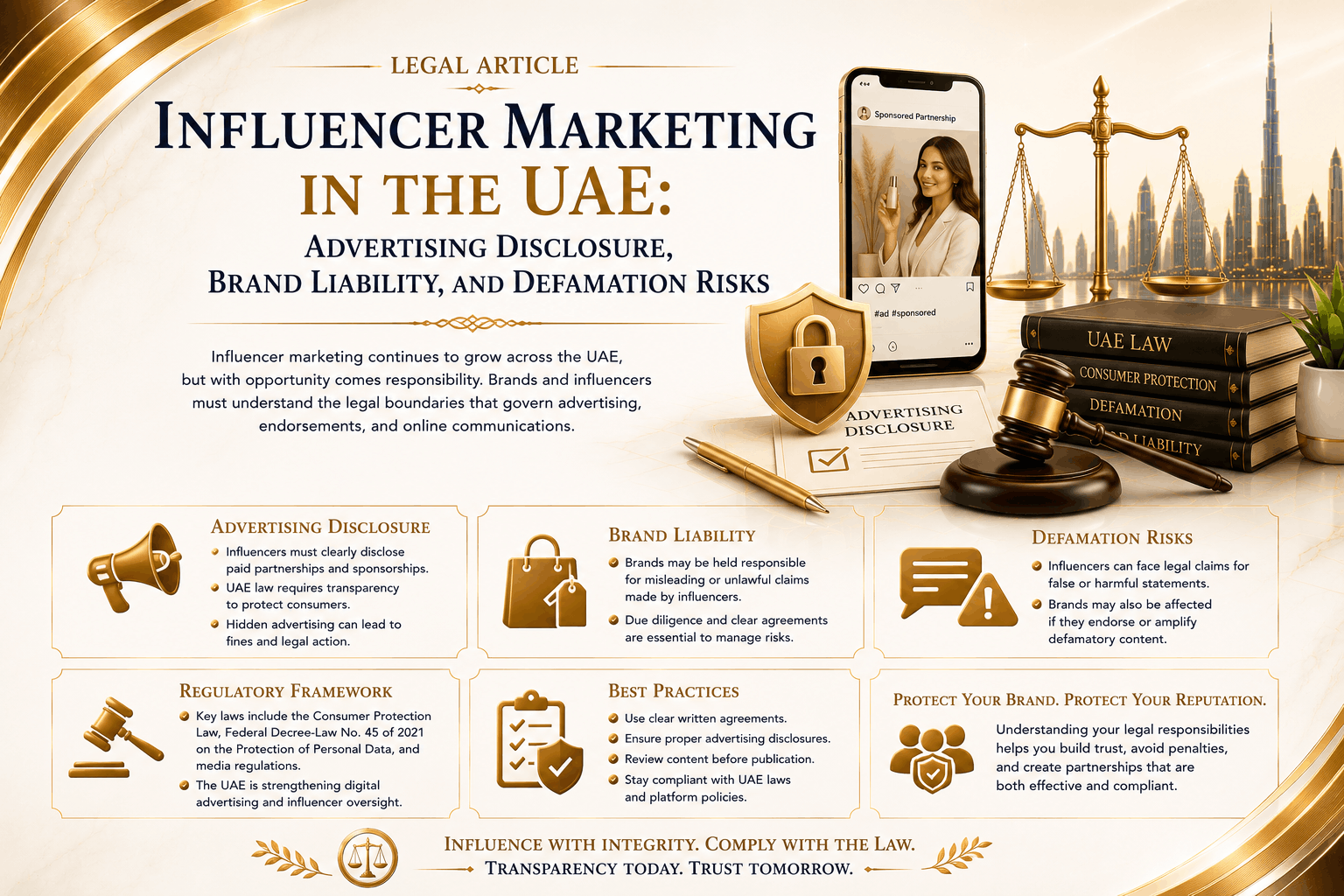
Influencer marketing in the UAE is a regulated commercial activity that can create legal exposure for influencers, brands, agencies, and talent managers if disclosure, permits, claims, contracts, image rights, and online speech are not handled properly.
UAE Legal Framework for Influencer Marketing
Influencer marketing in the UAE may involve media regulation, advertiser permits, consumer protection law, cybercrime law, defamation and reputation rules, privacy and personal data protection, copyright law, trademark law, contract law, e-commerce rules, sector-specific advertising restrictions, and local or free zone licensing requirements.
Official UAE legislation portal | UAE Ministry of Justice | UAE Media Council | Relevant UAE authority website | Dubai Courts | Abu Dhabi Judicial Department | DIFC Courts | ADGM Courts
Key Legal Concepts and Definitions
Important concepts include influencer marketing, paid promotion, advertising disclosure, advertiser permit, misleading advertising, brand liability, defamation, image rights, usage rights, affiliate marketing, content approval, and campaign substantiation.
Who Influencer Marketing Rules Apply To
These rules may affect influencers, content creators, bloggers, vloggers, streamers, celebrities, micro-influencers, brands, retailers, agencies, talent managers, production companies, photographers, editors, e-commerce platforms, clinics, hotels, restaurants, real estate companies, free zone companies, mainland companies, and visiting advertisers.
Rights and Obligations of Influencers, Brands, Agencies, Consumers, and Competitors
Influencers should protect payment, image, usage rights, and reputation while complying with disclosure, permit, and advertising rules. Brands should provide accurate claims, require compliance, approve content, and avoid using influencers to publish misleading or defamatory content. Agencies should document approvals and clarify responsibility between the parties.
Advertising Disclosure and Advertiser Permits
Promotional relationships should be disclosed clearly. Disclosure should be visible, understandable, and placed where the audience can notice it before relying on the content. Permit compliance should be checked before the campaign starts, especially for paid collaborations, gifted content, affiliate promotions, and visiting influencers.
False Claims, Misleading Advertising, and Consumer Complaints
Influencer content may be misleading if it exaggerates results, hides sponsorship, omits key information, misstates price or availability, creates false urgency, or suggests guarantees without evidence. Brands should substantiate claims before approving captions, scripts, reels, stories, or live promotions.
Brand Liability for Influencer Content
A brand may face risk where it briefed, approved, paid for, reposted, boosted, or benefited from content containing misleading statements, unlawful comparisons, privacy violations, unauthorised images, or defamatory claims. A structured approval process reduces risk.
Defamation, Reputational Harm, and Online Speech Risks
Influencers and brands should avoid public accusations, insults, competitor attacks, “exposure” videos, private information disclosures, or claims that cannot be proven. Online speech in the UAE can create serious legal consequences, especially when it harms reputation or spreads false information.
Unauthorized Use of Images, Videos, Music, and Personal Data
Campaigns should use licensed music, cleared footage, permitted images, approved testimonials, and documented model or customer consent. Tagging a brand or appearing at an event does not automatically grant broad commercial advertising rights.
Influencer Contracts and Campaign Protection
A strong influencer contract should cover deliverables, payment, disclosure wording, permits, approval, claims, prohibited content, competitor references, usage rights, paid media rights, exclusivity, confidentiality, takedown, revisions, reporting, indemnity, termination, and dispute resolution.
Dubai, Abu Dhabi, Free Zones, DIFC, ADGM, and Sector-Specific Considerations
Federal media, consumer, cybercrime, copyright, and data protection principles are important across the UAE, while licensing and complaint routes may differ by emirate or free zone. Regulated sectors such as healthcare, education, finance, real estate, legal services, and children-related services require special care.
Procedures in the UAE
- Conduct a campaign risk assessment before launch.
- Check influencer permit status, brand licence, and agency role.
- Draft or review the influencer contract.
- Approve scripts, captions, visuals, music, disclosures, and claims before publication.
- Monitor published content, comments, consumer complaints, and platform issues.
- Preserve evidence if a dispute arises.
- Respond to complaints through correction, takedown, settlement, legal notice, authority response, or court action where appropriate.
Required Documents and Evidence
- Influencer contract, campaign brief, content calendar, drafts, captions, and scripts
- Approval emails, WhatsApp messages, agency instructions, and brand sign-off records
- Advertiser permit records, trade licences, agency agreements, and talent management agreements
- Invoices, payment records, affiliate-code reports, discount-code data, and analytics
- Screenshots, screen recordings, original files, timestamps, platform links, and published content copies
- Music licences, image releases, model releases, customer consent forms, and testimonial approvals
- Product claim substantiation, medical or technical approvals, and competitor comparison evidence
- Consumer complaints, competitor objections, legal notices, takedown requests, platform messages, and settlement correspondence
Common Misunderstandings
- If it is a gift, disclosure is not needed.
- Only the influencer is responsible.
- Hashtags at the end are enough.
- A negative review is always safe if it is true.
- A verbal agreement is enough.
- Using trending music is always allowed.
- Customer photos can be used because they tagged the brand.
- Deleting the post solves everything.
Common Mistakes to Avoid
- Launching campaigns without checking permit requirements
- Failing to disclose paid or gifted promotions
- Approving exaggerated or unsupported claims
- Using competitor names carelessly
- Relying only on WhatsApp agreements
- Failing to secure image and music rights
- Ignoring consumer complaints
- Not preserving stories, reels, comments, and approval records
- Responding publicly in anger during a dispute
Practical Examples
Beauty Clinic Promises Guaranteed Results
A clinic pays an influencer to promote a treatment with unsupported guarantees. The legal issue is misleading advertising and health-claim risk. A lawyer would review claim evidence, approved wording, consent forms, and corrective action.
Restaurant Gives Free Meal Without Disclosure
A restaurant invites an influencer for a free meal in exchange for a reel, but the post appears independent. The better approach is a written collaboration agreement requiring clear disclosure and brand approval.
Influencer Attacks a Competitor
A campaign accuses a competitor of selling fake goods. The risk includes defamation, misleading advertising, and trademark issues. A safer approach is factual, evidence-based comparison reviewed before publication.
Customer Image Used in Paid Ads
A gym uses a customer transformation image in paid advertising without written consent. A lawyer would review permission, usage scope, takedown, settlement, and future release forms.
Legal Risks and Consequences
Poorly managed influencer marketing may lead to advertiser permit issues, consumer complaints, misleading advertising claims, civil compensation claims, contract disputes, payment disputes, defamation complaints, cybercrime allegations, privacy complaints, copyright claims, takedown requests, platform penalties, business disruption, reputational damage, and loss of campaign budget.
How a Lawyer Evaluates an Influencer Marketing Matter
A lawyer reviews jurisdiction, applicable law, permit status, brand licence, agency role, contract wording, disclosure, claim substantiation, consumer impact, platform evidence, copyright, image rights, competitor references, data protection, defamation risk, regulatory route, criminal risk, settlement options, litigation risk, commercial impact, and client objectives.
How a Lawyer Builds a Stronger Legal Position
Legal support may include drafting contracts, reviewing briefs, checking permit requirements, preparing disclosure wording, reviewing claims, protecting image rights, drafting releases, preparing giveaway terms, advising on competitor comparisons, responding to complaints, sending legal notices, negotiating settlement, preserving digital evidence, and representing clients before authorities or courts.
Settlement vs Litigation or Regulatory Complaint
Settlement may be useful for unclear disclosure, unpaid fees, unauthorised reposting, early deletion, claim correction, or accidental usage beyond scope. Litigation, criminal complaint, regulatory complaint, or formal legal action may be necessary for serious defamation, deliberate false advertising, refusal to remove content, misuse of private images, or repeated breach.
When Urgent Legal Action May Be Needed
- A defamatory post is spreading
- A false claim is causing consumer complaints
- A competitor is threatening legal action
- An authority complaint has been received
- A post uses someone’s image without consent
- An influencer refuses to remove harmful content
- A brand is using content beyond the agreed licence
- Evidence may disappear from stories or live streams
Frequently Asked Questions
1. Do influencers need permits in the UAE?
Individuals engaging in advertising activities on social media platforms may require an Advertiser Permit, whether paid or unpaid. Visiting advertisers may need to use the visitor permit route through licensed agencies.
2. Does gifted content need disclosure?
Yes, gifted products, free services, hotel stays, treatments, invitations, affiliate benefits, or commission arrangements may create a promotional relationship and should be disclosed clearly.
3. Can a brand be liable for influencer content?
Potentially, yes. A brand may face risk if it briefed, approved, paid for, reposted, or benefited from content that contains misleading claims, defamation, privacy violations, or unauthorised images.
4. What makes influencer advertising misleading?
Advertising may be misleading if it contains false claims, hides sponsorship, omits key information, creates false urgency, misstates prices, or suggests guarantees without evidence.
5. Can influencers compare competitors?
Competitor comparison should be factual, fair, and evidence-based. Unsupported claims that a competitor is fake, dishonest, unsafe, or illegal can create serious legal risk.
6. Can brands repost influencer content?
Brands should only repost influencer content if usage rights are agreed. The contract should define platform, duration, paid ads, editing rights, and any additional payment.
7. Can customer images be used in influencer campaigns?
Customer images should not be used casually. Written consent is especially important for commercial, sensitive, paid advertising, healthcare-related, children-related, or extended-use campaigns.
8. Is using trending music safe?
Not always. Trending platform audio may not provide commercial advertising rights. Brands should check music licensing before posting, boosting, or reusing content.
9. Can an influencer be sued for defamation?
An influencer may face legal risk if content harms someone’s reputation, insults a person or business, spreads false information, or discloses private information.
10. Why is legal advice important?
Legal advice helps check permit requirements, disclosure, claims, contracts, image rights, copyright, defamation risk, platform evidence, and complaint response before a campaign becomes public.
Conclusion
Influencer marketing in the UAE is powerful, but it must be managed as regulated commercial communication. Disclosure, permits, claim accuracy, contracts, image rights, copyright, consumer protection, and reputation risk all need careful planning.
Early legal advice can help brands, influencers, and agencies structure campaigns properly, reduce legal exposure, preserve evidence, respond to complaints, and protect commercial reputation before the matter becomes more complicated.
Need Advice About Influencer Marketing in the UAE?
Obtain tailored advice on influencer contracts, disclosure wording, advertiser permits, brand liability, misleading claims, image rights, defamation risk, takedown strategy, settlement, and campaign compliance.
Book a Legal Consultation