Debt Recovery in the UAE: From Legal Notice to Court Judgment and Enforcement
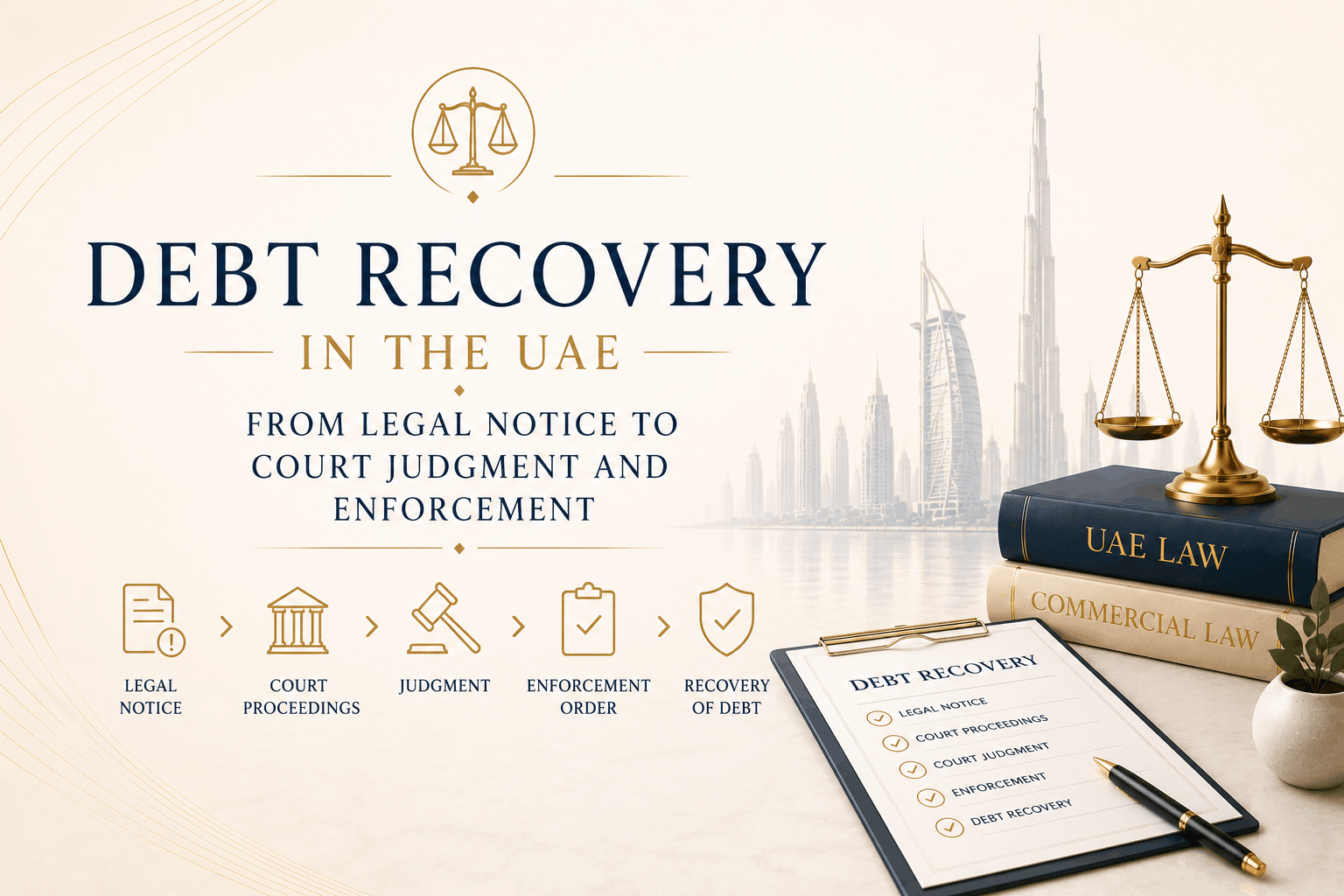
Debt recovery in the UAE is not only about asking someone to pay. A successful recovery strategy depends on the strength of the documents, the legal basis of the debt, the debtor’s response, the correct court or authority, the availability of payment order procedures, settlement options, and practical enforcement.
UAE Legal Framework for Debt Recovery
Debt recovery in the UAE may involve civil procedures, evidence rules, commercial transactions law, settlement frameworks, and enforcement procedures. The correct legal route depends on the nature of the debt, forum, documents, and debtor response.
Official UAE legislation portal | UAE Ministry of Justice | Relevant UAE authority website | Dubai Courts | Abu Dhabi Judicial Department | DIFC Courts | ADGM Courts
Key Legal Concepts and Definitions
Debt
A debt is an amount owed by one party to another arising from a contract, invoice, loan, lease, settlement, commercial transaction, or acknowledgment.
Legal Notice
A legal notice is a formal demand requesting payment or performance before escalation.
Payment Order
A payment order is a court procedure that may be available for clear, due, quantified monetary claims supported by written evidence.
Execution
Execution is the enforcement stage after a judgment or enforceable instrument.
Who the Law Applies To
Debt recovery may apply to suppliers, contractors, consultants, service providers, landlords, tenants, investors, creditors, banks, companies, individuals, mainland businesses, free zone companies, DIFC/ADGM entities, expats, and UAE nationals.
Rights and Obligations of Creditors and Debtors
Creditors may demand payment, issue legal notices, negotiate settlement, file payment order applications, file civil claims, and pursue enforcement. Debtors may dispute the claim, prove payment, challenge documents, rely on set-off, or negotiate settlement.
Step-by-Step Debt Recovery Procedures in the UAE
The usual process involves reviewing the debt, collecting evidence, assessing whether the debt is clear and due, sending a legal notice, considering settlement, filing a payment order or civil claim, addressing expert review where needed, obtaining judgment, and proceeding to enforcement.
Required Documents and Evidence
- Contracts and agreements
- Invoices and statements of account
- Purchase orders and delivery notes
- Completion certificates and handover records
- Bank transfers and receipts
- Cheque records and settlement agreements
- Acknowledgments of debt
- Emails, WhatsApp messages, and SMS records
- Legal notices and debtor responses
- Company trade licence and signatory documents
- Accounting records, ledgers, and expert reports
Legal Notices and Pre-Court Strategy
A legal notice should identify the parties, transaction, amount claimed, due date, supporting documents, payment deadline, reservation of rights, and warning of legal action. It should avoid emotional language, unsupported accusations, and inconsistent calculations.
Payment Orders in UAE Debt Recovery
Payment orders may be useful for clear monetary claims supported by written evidence. They may not be suitable where the debt is heavily disputed, requires expert analysis, or depends on complex performance issues.
Civil Claims and Court Proceedings
If a payment order is unsuitable, a creditor may file a civil or commercial claim. The claim should identify the legal basis, amount due, jurisdiction, supporting documents, and requested relief. The debtor may raise defences such as payment, set-off, defective performance, or lack of authority.
Attachment, Execution, and Enforcement
After a judgment becomes enforceable, the creditor may pursue execution. Enforcement may involve bank account attachment, receivables, movable assets, real estate-related steps, or other measures available under the relevant procedure.
Settlement Leverage and Payment Plans
Settlement can be useful where it secures faster payment. A payment plan should include exact amounts, due dates, default consequences, acknowledgment of debt, and signatures by authorised persons.
Common Misunderstandings
“An invoice is enough to win.”
An invoice helps, but the creditor may also need proof of contract, delivery, performance, acceptance, and non-payment.
“Court judgment means immediate payment.”
A judgment is not the same as recovery. Enforcement may require further steps.
“Settlement means weakness.”
Settlement may be a strong strategy when it secures payment faster and preserves enforcement rights.
“All debts use the same procedure.”
Some debts may qualify for payment order procedure; others require civil claims, arbitration, rental proceedings, or specialised routes.
Common Mistakes to Avoid
- Waiting too long before taking action
- Not preserving evidence
- Sending emotional or harmful messages
- Filing the wrong procedure
- Ignoring debtor defences
- Accepting vague payment plans
- Not planning enforcement before filing
Practical Examples
Example 1: Supplier with Unpaid Invoices
A supplier should support invoices with purchase orders, delivery notes, acceptance records, payment history, and account statements.
Example 2: Consultant with No Signed Contract
Emails, deliverables, invoices, meeting notes, and WhatsApp instructions may help prove the agreement and work performed.
Example 3: Debtor Offers Instalments
The creditor should document the settlement with payment dates, default clauses, and acknowledgment of debt.
Example 4: Judgment but No Recovery
Enforcement planning should begin before filing by assessing whether the debtor has assets or traceable accounts.
Legal Risks and Consequences
Poorly handled debt recovery may lead to rejected claims, weak evidence, increased costs, delayed recovery, loss of leverage, asset disposal, counterclaims, enforcement difficulties, or an uncollectable judgment.
How a Lawyer Evaluates a Debt Recovery Case
A lawyer evaluates the legal basis, contract wording, jurisdiction, amount due, evidence strength, debtor acknowledgment, payment history, defences, payment order suitability, expert needs, settlement options, assets, enforcement prospects, and client objectives.
How a Lawyer Builds a Stronger Legal Position
A lawyer can review documents, prepare an evidence bundle, draft legal notices, calculate the claim, assess payment order eligibility, file claims, negotiate settlement, draft payment plans, and guide enforcement after judgment.
Settlement vs Litigation
Settlement may be useful where the debtor admits the debt or can provide security. Litigation may be necessary where the debtor denies the debt, hides assets, ignores notices, or uses delay tactics.
When Urgent Legal Action May Be Needed
Urgent legal advice may be required where the debtor may transfer assets, close a company, leave the UAE, delete evidence, or use settlement discussions only to delay payment.
Frequently Asked Questions
1. What is the first step in debt recovery in the UAE?
The first step is to review the legal basis of the debt and collect evidence, including contracts, invoices, delivery proof, payment history, debtor details, and due date.
2. Is a legal notice required before filing a debt claim?
It depends on the contract, debt type, and procedure. Even where not strictly required, a legal notice is often useful.
3. Can unpaid invoices be recovered through court?
Yes, unpaid invoices may be recovered if the creditor proves the legal basis of the debt and the amount due with supporting evidence.
4. What is a payment order in the UAE?
A payment order is a court procedure that may be available for clear, due, quantified monetary claims supported by written evidence.
5. What if the debtor disputes the amount?
If the debtor disputes the amount, the creditor may need a civil claim and possibly expert review.
6. Can WhatsApp messages help prove a debt?
Yes, WhatsApp messages may support a debt claim, especially if they show acknowledgment or payment promises, but they should be supported by other documents.
7. What happens after a UAE court judgment is issued?
The creditor may need to proceed with execution or enforcement through the relevant court process.
8. When should a creditor contact a lawyer?
A creditor should contact a lawyer when the debt becomes overdue, when payment is disputed, before accepting settlement, or where assets may be moved.
Conclusion
Debt recovery in the UAE requires a structured legal strategy from the first reminder to final enforcement. The strongest approach is evidence-based, procedurally correct, commercially realistic, and focused on actual recovery.
Need Help Recovering an Unpaid Debt in the UAE?
If you are trying to recover an unpaid debt in the UAE, early legal advice can help you assess your evidence, choose the correct procedure, and protect your position before the debtor gains more time.
Book a Legal Consultation